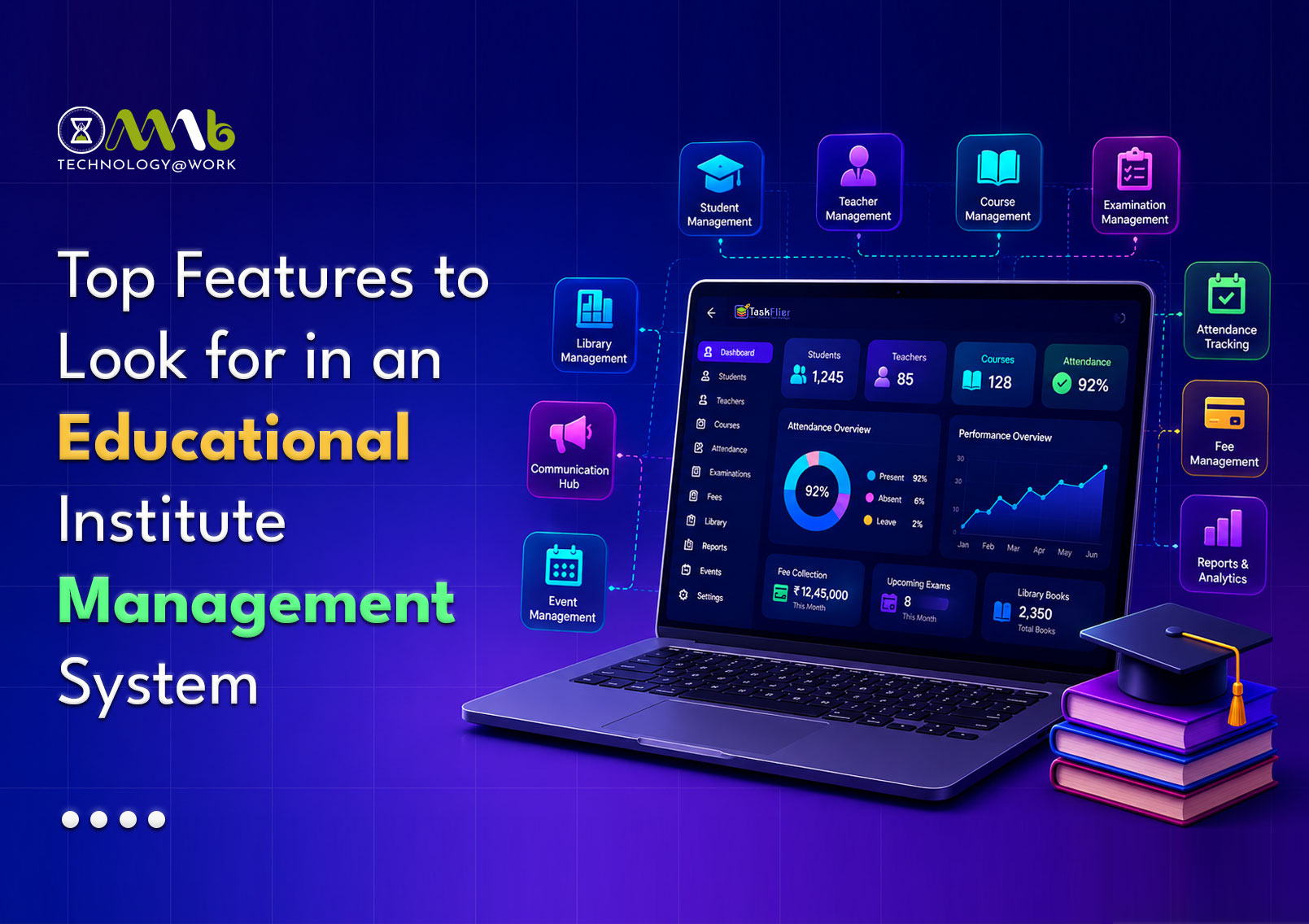
Top Features to Look for in an Educational Institute Management System
The complexities of being an educational institution today are vastly different from ten years ago. Schools and colleges today are not simply running classrooms and conducting examinations; they have to manage everything from admissions, fees, communications, tracking student performance, etc. This is why all educational institutions must find a good educational management system in order to operate efficiently as well as grow in size.
As competition has increased, so have the expectations from students and their parents; you cannot operate in a manual manner or via different, disconnected tools anymore. A great management system can really help streamline operational efficiencies, improve the efficiency of communication within and outside the institution, and improve the overall learning experience for the children being educated there.
There are many available options for educational management systems available today; therefore, how do you determine which option to choose? Let’s look at the important features that you should look for in an educational management system to help you to determine which product is best suited for your institution.
Why Institutions Need a Modern Management System
It’s crucial to understand the reasons behind the trend toward digital systems prior to discussing their features. There are several challenges presented by traditional processes, including the following:
- Duplicated data, inaccurate data
- Slow communication
- Challenges in keeping track of records
- No real-time visibility
Modern ERP software for educational institutes creates solutions to all these challenges by integrating all functions onto a common platform. So that administrators, instructors, students, and parents can communicate and have access to each other at all times.
1. Centralized Student Information System
Managing student information in world-class universities is essential for their success. Each student has unique characteristics and academic records associated with them. Tracking dropout rates, attendance history, fee payment status, assessment results, etc., are all examples of how to track your students through a university’s education program. This makes everything more manageable and easier to keep organized for both the university and the student.
2. Seamless Admission Management
When students apply for admission, this is usually their first contact with the institution. Therefore, an efficient and organized process creates a positive first impression. An effective college admission system will provide:
- Online application forms.
- Automated document checking.
- Ability to track course application status.
- Ability to store and retrieve applicant information easily.
By employing robust ERP software, educational institutes, colleges, and universities can effectively manage large numbers of applicants without any manual effort.
3. Fee Management and Billing
Manually processing handling fees can take quite a bit of time and be prone to error, but a fully integrated fee management system can streamline the whole process.
There are some specific features you’ll want to look for when implementing this type of solution:
- Automated fee calculations
- Ability to pay online
- Ability to produce receipts
- Fee notifications and reminders
An integrated fee management system will not only make the fee management process more efficient but also provide parents and students with greater transparency.
4. Attendance and Timetable Management
Daily tasks like managing schedules and tracking attendance must be done with accuracy and consistency.
A good educational institute management system should offer:
- Digital attendance tracking
- Automated reports
- Creating and updating timetables
- Reminders about any changes to schedules
- Better coordination among students, teachers, and administration.
5. Examination and Performance Tracking
One of education delivery’s primary functions is to measure student success. A quality assessment system enables institutions to easily manage their assessment operations while being a highly effective student performance measurement tool.
Possible assessment system features:
- Management of Online Assessments
- Grading Calculation and Report Creation
- Performance Analytics
- Progress Monitoring Over Time
Employing these types of capabilities will allow educational institutions to measure student strengths and areas of improvement to a much greater degree than they have previously done.
6. Communication and Collaboration Tools
For operations to run smoothly, it is imperative that institutions communicate effectively. To accomplish this, a proper communication system must be developed and be able to integrate all parties involved with an institution.
Some features of an effective communication module may include:
- Notifications and announcements;
- Messaging between parties (parents, teachers, and students);
- Integration of email/SMS messaging;
- Event updates/reminders, and More.
Modern ERP software for educational institutes ensures that important messages are delivered to the right individuals about events happening within the school when they need to be notified.
7. Faculty and Staff Management
Staff management is equally as important as student management. A comprehensive staff management system will include tools that contain:
- Detailed employee records and profiles
- Processes for tracking attendance and leave
- Payroll processing
- Employee performance evaluations
This way, organizations can keep their staff organized and efficiently managed.
8. Reporting and Analytics
Decisions made on the basis of data are critical. Institutions require accurate data and up-to-date live insight about their environment to facilitate the best possible decisions.
An advanced Educational Institute Management System must enable the user to access:
- Customisable reports
- Academic Performance Analysis
- Financial Reporting
- Attendance Reporting
These types of insight help administrators by enabling them to make well-informed and timely decisions, leading to an increase in overall effectiveness and efficiency.
9. Cloud-Based Access
Accessibility is important today. As we have Cloud solutions, your data can be accessed from anywhere and at any time.
Some of the advantages provided by Cloud-based systems are:
- You can work from various locations
- Data is kept securely
- Automatic updates
- Infrastructure cost savings.
This level of flexibility is specifically beneficial for institutions that operate multiple campuses or provide remote education.
10. Scalability and Integration
Institutions change as they develop. Hence, when selecting a system, it’s important that it be able to grow as your institution’s needs will change as well.
Seek the following:
- Support for a growing student population
- Integration with 3rd party applications
- Customizable Modules
- Technologies that are ready for the future
For your ERP software for educational institutes to be the best, it MUST conform to your institution’s changing requirements.
Common Mistakes to Avoid
When choosing a system, many institutions make the following errors:
- They choose solely on price without regard to functionality and/or scalability;
- they do not consider user friendliness (the complexity of the system can lead to more problems than it solves);
- and they do not have adequate training or support (even a good system will not work if users do not understand how to use it).
Bringing It All Together
Managing admission, student information, communication, and student performance separately can feel like too much of a burden. Having an integrated solution will significantly alleviate that burden.
For those seeking a completely integrated solution, MNB Soft’s TaskFlier is the answer. TaskFlier combines both CRM and project management into one platform — allowing educational institutions to more effectively manage their operation, streamline communication among their employees, and improve their overall levels of operational effectiveness.
Final Thoughts
Selecting an educational institution management system (EIMS) is a critical business decision, not simply a technology choice. A school’s chosen EIMS has the potential to change its operational procedures by creating efficiencies, enhancing communication, and improving student success.
As the educational environment changes, institutions that adopt new, modern technologies will be better equipped than those that use outdated methods of operation (e.g., manual operations). A chosen EIMS creates a solid base for future success by eliminating manual operations and/or disparate solutions.
Ultimately, selecting an EIMS is about more than managing an educational institution; it’s about improving the learning experience for all stakeholders.
2 thoughts on “Top Features to Look for in an Educational Institute Management System”
Leave a Reply


Hello !!
I came across a 179 very cool tool that I think you should explore.
This resource is packed with a lot of useful information that you might find insightful.
It has everything you could possibly need, so be sure to give it a visit!
https://www.sportsoddshistory.com/college-football/
And don’t neglect, everyone, — a person always are able to inside the article locate answers for the most most complicated questions. We tried to explain all data using the extremely understandable method.
Thank you for sharing the resource! We appreciate your suggestion. We’ll take a look when it aligns with our content and audience. Thanks for stopping by! 😊