Retail Management System vs Spreadsheets: Which is Right for Your Store in 2026?
Running a retail business in 2026 is no longer about selling products only; it has become a process of managing your operations efficiently, tracking and analyzing customer behavior, and anticipating your competition. Many retailers still use a spreadsheet-based system to track sales, inventory, and purchase information, but as retail gets more complicated, the question of whether to continue using spreadsheets or use a retail management software system becomes very important.
The answer is not always clear-cut. Simplicity and low cost are usually the driving factors behind spreadsheet-based systems, while the ability to use modern retail software solutions will allow you to do much more than just track data. We will break down both of these options so you can determine which is best for you.
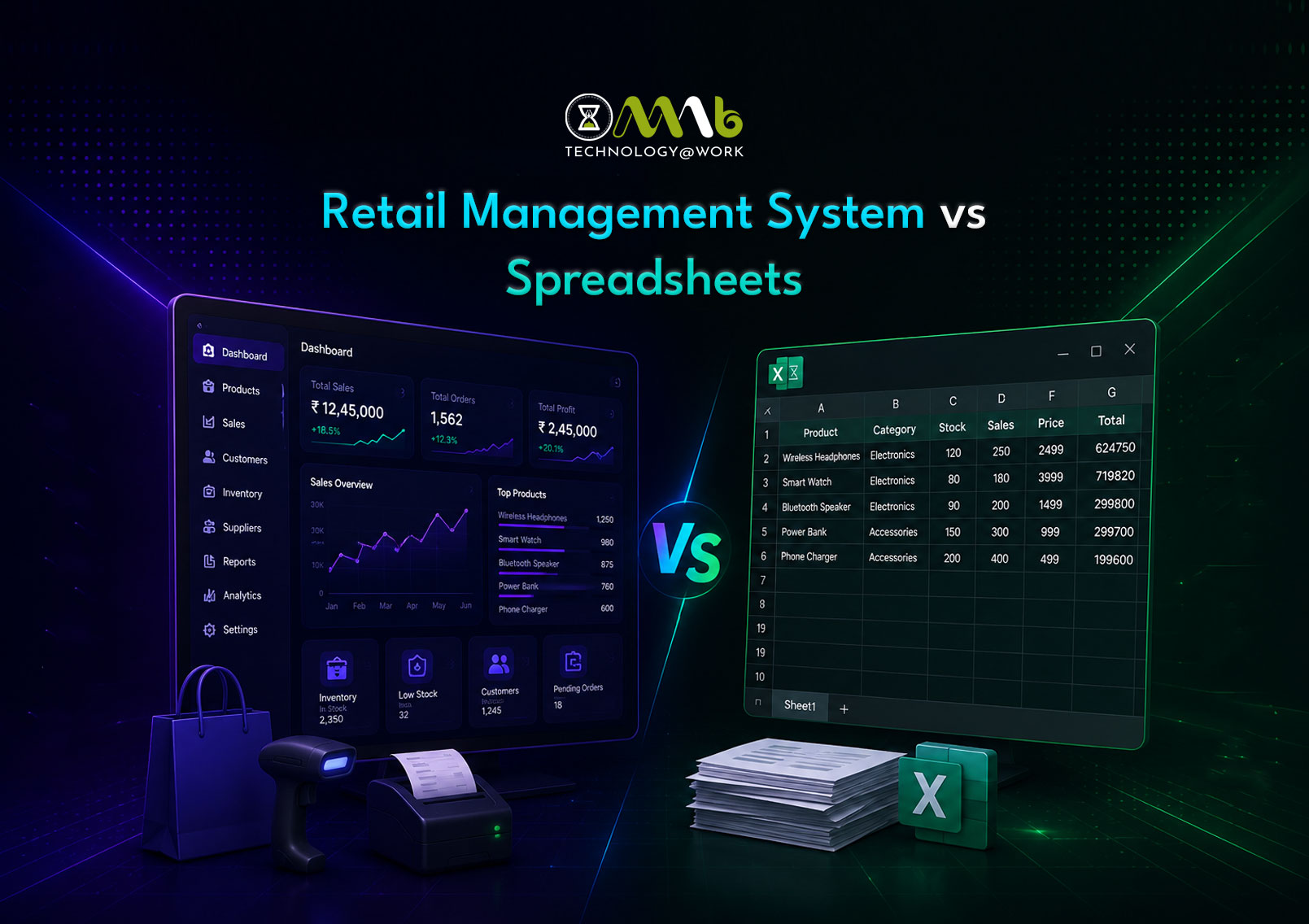
Understanding the Basics: Spreadsheets vs Retail Software
Since the dawn of small business, dating back in history, spreadsheets (whether they are from Excel or Google Sheets) have been used for tracking sales, recording sales, tracking payroll,l and generating reports manually.
A retail management software system is a dedicated system designed specifically for the retail sector. It is capable of tracking sales, inventory, billing, and generating reports in one centralized location.
There may appear to be no difference between the two solutions at first glance; however, once a retail business starts to grow, the differences become far more apparent.
Where Spreadsheets Work Well
Spreadsheet programs can also benefit small/medium-sized businesses that are in their infancy or are very small stores.
Inexpensive Initial Costs
Most spreadsheet programs are free or cost little money, which makes them very attractive for startup businesses with limited budgets.
Minimalistic Data Tracking
If you, as a business owner,r have very few products and/or a limited number of transactions (limited quantities), then a spreadsheet program can allow you to do the following things:
- Record Daily Sales
- Track Simple Inventory
- Maintain Basic Financial Records
Flexibility
Spreadsheet programs can be customized to meet your needs without the need to rely on other external software to do the same thing.
However, once your business starts to grow into a larger operation, the advantages of using spreadsheet programs can diminish greatly.
The Limitations of Spreadsheets in Modern Retail
When managing your store as it grows, it becomes increasingly difficult to manage everything manually.
High Risk of Errors
As you manually enter all your data into different systems, the chance of making an error increases. Even a small mistake in stock amounts or pricing could mean significant losses for your business.
Lack of Real-Time Updates
When spreadsheets do not automatically sync between systems, you run the risk of having multiple users edit the same file at the same time, leading to confusion and outdated information.
Time-Consuming Processes
The sheer amount of work required to manually track inventory, calculate totals, and create reports takes away from time spent growing your business.
No Integration
Since spreadsheets do not integrate with any billing systems, point-of-sale machines, or eCommerce providers, modern businesses require retail management software to be competitive.
A retail management software solution will change everything for your business.
Why Retail Management Software is the Future
Retail businesses today need more than just data storage—they need smart systems that improve efficiency and decision-making.
1. Real-Time Inventory Management
When a sale occurs, an enterprise retail management program will alter the stock-on-hand balance automatically to help your store:
- Maintain proper inventory levels (no out-of-stock or overstock)
- Monitor your entire inventory across your multiple retail outlets
- Receive alerts when your inventory is running low so you can reorder before it runs out.
2. Faster Billing with POS Integration
The most modern retail software package includes a POS system (point-of-sale) functionality to significantly enhance speed and accuracy of billing by providing:
- Instant billing – you don’t have to do manual calculations
- Multiple forms of tender for payment (cash, credit, gift card, etc.)
- Automatic generation of receipts (could also integrate with customers’ e-mail, etc.)
These capabilities not only save you time but also improve your customer service (by eliminating line waits).
3. Centralized Data Management
Retail software solutions in India will give you a single source of data for your sales, inventory, and customers.
You’ll be able to:
- Access information from one point
- Maintain accurate records
- Eliminate data duplication
4. Advanced Reporting and Insights
Compared to spreadsheets, retail software offers in-depth reporting and analytical capabilities.
The following information can be easily tracked using this type of software:
* Your best-selling items.
* Daily and monthly sales.
* Profit margins.
Retail Software vs Spreadsheets: A Quick Comparison
| Feature | Spreadsheets | Retail Software |
| Data Entry | Manual | Automated |
| Accuracy | Prone to errors | High accuracy |
| Real-Time Updates | No | Yes |
| Inventory Tracking | Basic | Advanced |
| Billing | Manual | Integrated POS |
| Scalability | Limited | Highly scalable |
This comparison clearly shows why businesses are shifting toward retail software solutions in India.
When Should You Upgrade?
Data collected through these methods provides you with valuable information for making intelligent decisions regarding your business.
Not every organization needs to convert to new software right away. However, when you experience the following signs, it might be a good time to upgrade:
- You have a large inventory of items.
- You have frequent discrepancies between your records for inventory and the actual physical inventory.
- Your business takes longer than it should during peak hours to complete bills to customers (or other similar transactions).
- You are trying to grow your business beyond just one location by adding additional store(s).
- You want to operate both an online and offline sales channel.
When you reach these benchmarks within your organization, continued use of spreadsheets will hinder your overall growth potential.
The Rise of Omnichannel Retail
In 2026, retail will be more than just physical retail, as retail customers will expect businesses to offer both physical and online channels for their purchases.
The retail management software system will make it easier to:
- Connect and synchronize inventory across different sales channels.
- Manage and track all sales in both physical and online locations.
- Provide customers with a seamless shopping experience.
- Using spreadsheets to be able to integrate everything together is impossible.
Choosing the Right Retail Solution
It is critically important that when you choose a technology system, you consider your business requirements. You should look for:
- A user-friendly interface
- Integration with your POS and eCommerce
- Visibility of your inventory in real time
- Scalable features that can grow with your company
The right retail software solutions in India should streamline your operations rather than complicate them.
Bringing Efficiency to Your Retail Business
As companies develop, handling sales, buying,g and stock independently from each other may produce pressure. This is where integrated solutions can greatly improve your company’s operational efficiency.
Mparchi provides a complete sales, purchasing, and inventory control solution under a single roof – no more switching back and forth between spreadsheets and unrelated tools. Mparchi allows retailers to be able to have full control over their business and have an efficient operating model.
If you want to expand your business into the online selling space, MNB Mart is one of the many platforms that can help you quickly go digital with your retail business and reach more customers.
Final Verdict
Spreadsheets can effectively support small businesses, but at some point, they will not help your company achieve long-term growth. As the retail marketplace becomes increasingly competitive and customers become more demanding, your reliance on manual systems will stunt your growth potential.
A retail management software system provides the efficiency, accuracy, and scalability to compete in today’s marketplace. You will experience time savings and have better information when making decisions, and as a result of using a retail management software system, you will create better customer experiences.
As we move into 2026 and into the future, the real issue is not whether to upgrade but when you can change systems as quickly as possible.