Smart Inventory Management Tips Every Retail Business Should Follow
Retailing means more than just providing the customer with a product; it’s ensuring that you have what they want at the right time. Inventory is at the core of this! Sometimes you have too much, which ties up your funds, and sometimes you have too little, and the customer will go elsewhere to purchase the product they need.
Inventory Management (IM) continues to be one of the most important elements affecting retail profitability. As businesses continue to grow out of traditional shopfronts into e-commerce and social selling, using only spreadsheets and paper records will no longer suffice. For that reason, inventory management software for small businesses is being purchased by many retailers because of their desire for better inventory visibility at all times, the ability to automate their repetitive IM processes, and the ability to make smarter purchasing decisions.
Why inventory management deserves your attention
Inefficient inventory management can have a long-term impact on profitability. Out of stock on a popular item leads to lost sales, while an excess of inventory results in higher warehousing fees and potential markdowns. Finding the perfect balance is difficult; however, it is necessary.
Inventory management has evolved into making data-driven decisions (proactive vs reactive). LS Retail states that retailers who proactively manage their inventories are more successful at avoiding out-of-stocks and create opportunities for many businesses that sell through multiple channels; they can better manage stock because their inventories can be linked across all of their channels, therefore keeping their inventories consistent across them all.
For retailers today, managing their inventories properly is no longer just a best practice; today, proper inventory management is also becoming a competitive differentiator.
Keep track of stock in real time.
One of the best changes a retailer can make to improve business is to get real-time visibility of their inventory.
With every sale, return, buying order, & stock transfer, the amount of inventory will change. If these updates are not reflected in the inventory system right away, then it is easy to make mistakes. Employees may sell something that is out of stock or order new items for a location that already has that item.
Newer inventory systems automatically update the number of items in stock, allowing owners to see exactly how many of each item there are at any particular time. Some retailers are implementing RFID technology so that stores and warehouses can track items better and have fewer inventory-related mistakes.
By having real-time access to this information, retailers can avoid making mistakes altogether, instead of fixing them once they happen.
Let data guide your purchasing decisions.
Retailers who do well have a habit of anticipating customer needs so that they are not only responding to demand but also staying in front of it.
Historical sales, trends, seasonal purchasing patterns, and promotional calendars give retailers lots of data to predict how and when customers will purchase their products in the future, so that they can replenish their shelves with inventory before their customers need it, rather than relying solely on intuition.
Forecasting, whether it is for smart purchasing decisions, average holiday buying seasons, or predicting what types of products will be popular this summer, helps businesses avoid lost sales due to inventory stock shortages and unnecessary overflowing inventory because of having too much product in stock.
A good inventory software for small businesses allows retailers to turn historical sales data into useful information that will help retailers make better purchase choices.
Bring online and offline inventory together.
All customers want their shopping experience to be seamless, whether they buy something online, go into a store to purchase an item, or decide to do click and collect.
When online and in-store inventories function as separate entities, this creates an issue. Online, the product is showcased as available but has already been sold in-store, therefore causing frustration for both customers and store staff.
An integrated inventory system will alleviate the problem of online and in-store inventories functioning as separate entities by providing businesses with the means to synchronise on-hand stock levels across all sales channels in real-time. This will enable retailers to accurately display available-to-sell inventories, reduce the length of time spent on order fulfilment, and reduce the number of order cancellations due to erroneous on-hand inventory levels.
As retailers move to the omnichannel retail model, this level of coordination will become increasingly vital.
Make reordering automatic
There is ample opportunity for error with manual stock replenishment.
Employees who have many other responsibilities may miss low-stock products, reorder items late, or over-purchase items by mistake. Automated inventory systems help alleviate much of this uncertainty by providing reorder points and notifying the business whenever an item reaches a predetermined level of stock.
This basic automation provides a consistent level of inventory while also limiting the need for emergency purchases and excess stock. Lastly, it allows employees to concentrate on serving customers instead of performing routine inventory checks.
Replace manual processes with smarter systems.
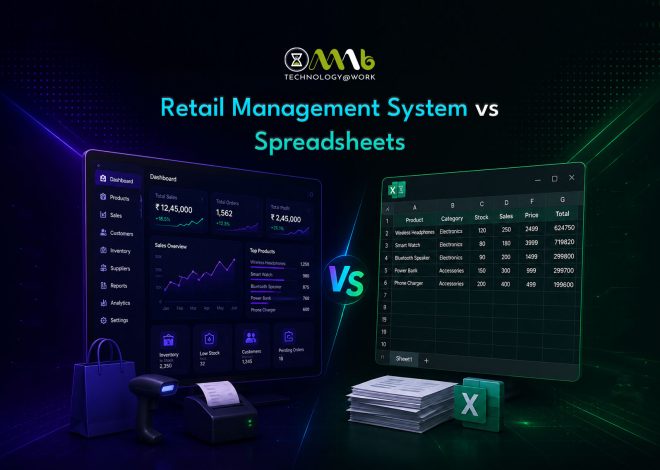
Many small businesses start with an inventory system managed on a spreadsheet. This may work for a while; however, as your inventory grows larger, maintaining manual inventory control becomes difficult and cumbersome. One incorrect entry or an entry that is not timely may cause you confusion in your entire business.
The modern inventory software for small businesses provides much more than just the counting of stock; it will manage purchase orders, warehouse transfers, barcode scans, vendor records, and reports created, as well as integrate with your accounting or POS systems in one location.
When selecting a small business inventory system, retailers should seek an easy-to-use, reliable inventory system that will allow them to grow as a business in the future.
Focus on features that actually matter.
Not every inventory management solution may provide the same value proposition as the next.
Retailers should focus on finding solutions that will specifically help them improve their operations rather than on finding a solution with a ton of features.
The following capabilities and features provide the greatest benefit when it comes to improving day-to-day operational procedures:
• Real-time inventory visibility
• Barcode scanning
• Low inventory alerts
• Purchase order management
• Reporting Dashboards
• Multichannel integration for inventory management
If your company has several different locations, looking for warehouse management or stock transfer tracking functionality will be just as important as looking for the other features listed above.
The best inventory software is not necessarily going to be the software with the most features, but rather the software that your organisation can consistently utilise.
Turn inventory data into better business decisions.
Current stock levels are certainly reflected in your inventory reports; however, the benefits of reviewing your inventory reports go far beyond just this information. The review of your inventory can provide insights into which of your items are selling quickly and which ones are not selling very well, and this will lead to the identification of seasonal buying habits. By doing this, you will have the ability to determine where your valuable working capital is tied up and make informed decisions about the purchase of new products, promotion of products, pricing of products, and merchandising of products.
Instead of using their assumptions to confirm inventory data, business owners can use accurate inventory reports to increase turnover, decrease waste, and maintain profit margins.
These small enhancements to the business can create a tremendous impact on your business over time.
Final thoughts
Effective inventory management isn’t necessarily all about working harder – it’s also about working smarter! Retailers adopting automated processes, along with real-time access to information about their inventories via connected systems, will spend far less time trying to fix current issues and instead focus on building their respective businesses.
If you are a retailer that is intending to grow rapidly. You should look to invest in the best inventory software for small businesses that will enable you to manage operations more easily on a daily basis, increase customer satisfaction, and create a sound base for continued long-term success. The right technology does not simply keep your shelves full; it gives retailers increased confidence as they attempt to make good decisions each and every single day!